
Last Updated: September 8, 2026
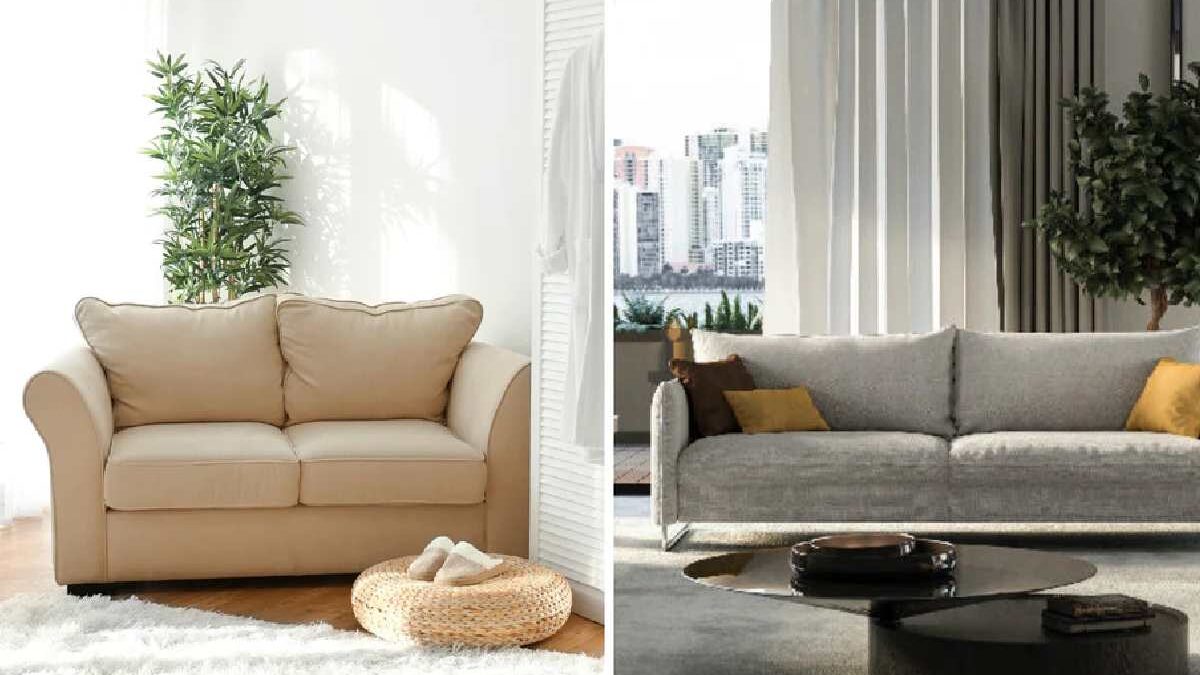
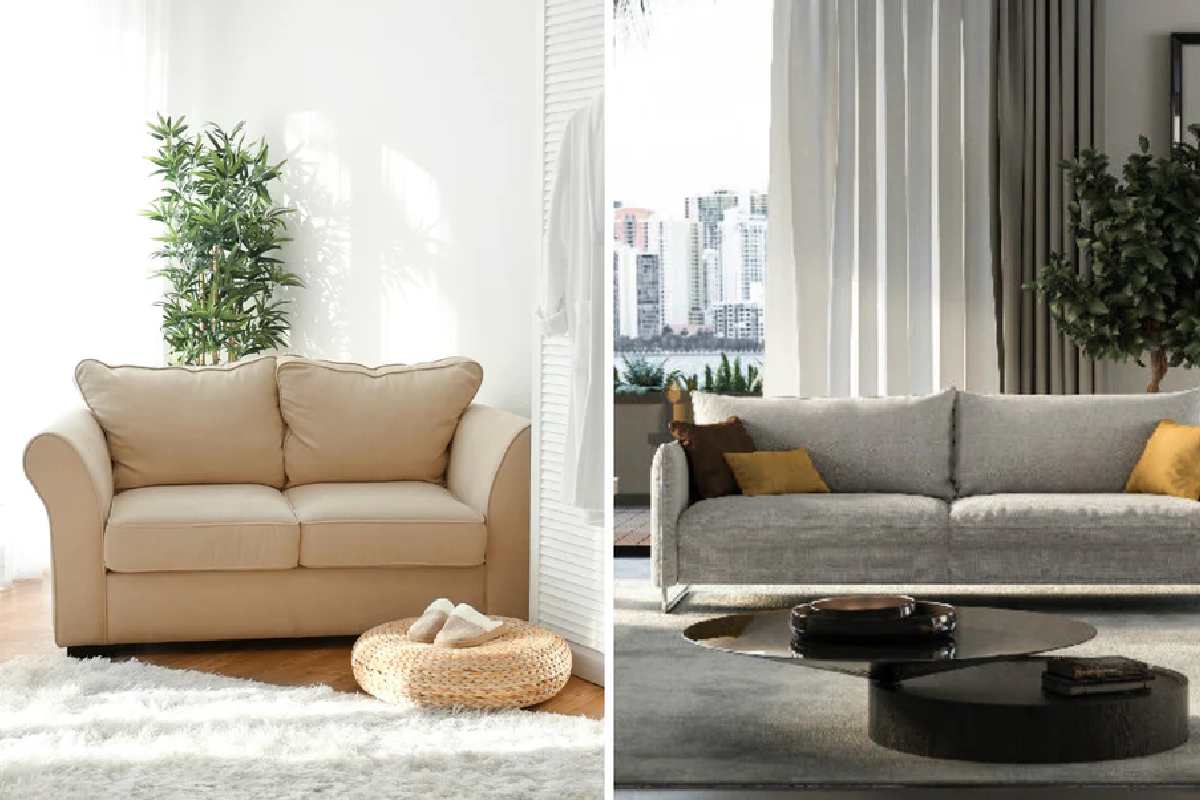
Leather vs. Fabric – The age-old debate over leather or fabric upholstery is still going when it comes to the question of what exactly your sofa is going to be made of. The two materials have different advantages, and the choice of the correct one can make a big difference in the beauty and functionality of your furniture. In order to help you arrive at a choice that will match your fashion, comfort and functionality, we shall analyze the advantages of leather and fabric in this article.
This article belongs to Lifestyle & Wellness
Table of Contents
What Is Leather?
Leather is created through a process called tanning, which treats raw animal hides so they don’t decay and become strong, long-lasting, and usable for products.
| Aspect | Explanation |
|---|---|
| Definition | Leather is a natural material made from tanned animal skin (hide). |
| Source | Obtained from animals like cow, buffalo, goat, sheep, and pig. |
| Manufacturing Process | Produced through tanning to prevent decay and improve durability. |
| Key Properties | Strong, flexible, breathable, and long-lasting. |
| Texture | Natural grain or smooth surface depending on processing. |
| Durability | Highly durable and improves with age when maintained properly. |
| Common Uses | Shoes, bags, belts, jackets, furniture, car interiors. |
| Types | Full-grain, top-grain, genuine leather, suede, nubuck. |
| Maintenance | Requires cleaning and conditioning for long life. |
| Environmental Aspect | Biodegradable but tanning must be eco-friendly. |
What is Fabric?
Fabric is created from natural or synthetic fibers that are processed into threads or yarns and then formed into a surface that is soft, flexible, and usable.
| Aspect | Explanation |
|---|---|
| Definition | Fabric is a material made by weaving, knitting, or bonding fibers together. |
| Raw Materials | Natural fibers (cotton, wool, silk) or synthetic fibers (polyester, nylon). |
| Manufacturing Process | Fibers → yarn → woven/knitted fabric. |
| Texture | Can be soft, smooth, rough, or stretchy. |
| Breathability | Varies by fiber type and weave. |
| Durability | Depends on fiber strength and fabric construction. |
| Common Uses | Clothing, upholstery, curtains, bedding, accessories. |
| Types | Natural, synthetic, blended fabrics. |
| Maintenance | Washing, drying, ironing as per fabric type. |
| Environmental Impact | Natural fabrics are biodegradable; synthetics are long-lasting but less eco-friendly. |
Leather vs. Fabric: Core Differences
| Parameter | Leather | Fabric |
|---|---|---|
| Material Type | Natural (animal hide) | Natural, synthetic, or blended |
| Texture | Smooth, firm, premium feel | Soft, textured, varied |
| Breathability | Low to moderate | High |
| Durability | High (especially full-grain) | Moderate to high (depends on weave) |
| Maintenance | Requires conditioning | Requires regular cleaning |
| Cost | Generally higher | More budget-friendly |
| Customization | Limited color range | Extensive patterns & colors |
| Aging | Develops patina | May fade or pill |
A Traditional Furniture in
Leather Upholstery
Leather Chesterfield has been associated with posh and gratification.
Leather is also an excellent choice due to the supple texture, rich color and timelessness of the product. One of the advantages of leather is its durability. It ages beautifully and gives your couch a personality as it slowly acquires a unique patina. Moreover, leather is very easy to take care of and therefore one of the best options when it comes to families having children or pets.
One should keep in mind, however, that there are some drawbacks of leather. Leather is not pleasant in hot and sticky conditions. Leather should be maintained regularly by moisturizing to avoid cracking, to maintain it in good condition. Some also claim that the cost of leather-upholstered sofa might be more expensive than the cost of fabric, and the price-tag can be justified by the beauty and strength in the long run.
Fabric Upholstery
The benefits of fabric upholstery, conversely, are a different matter. The variety of colors, patterns and textures in fabric choices enable one to be even more personalized to your own tastes and home style. Also, it is not uncommon that fabric couches cost less, so they are a good option when a designer does not want to exceed his or her budget.
In addition, cloth upholstery is more comfortable and more comfortable, and it can be used to create a cozy and cozy atmosphere in a living room. Although it cannot be said that fabric is as durable as leather, the development of upholstery technologies has offered both stain-resistant and simple to wash fabrics.
This is the case in that fabric sofas are a reasonable alternative to low-maintenance furniture or families with small children. Nevertheless, it is important to mention that some of the materials can wear and tear faster than leather. Their looks can be affected in the long run by the frequent cleaning they undergo.
Pros and Cons Summary: Leather vs. Fabric
| Material | Pros | Cons |
|---|---|---|
| Leather | • Premium, luxurious appearance • High durability and long lifespan • Easy surface cleaning (does not absorb spills easily) • Develops a natural patina over time • Higher resale and perceived value | • High initial cost • Requires periodic conditioning and care • Can feel hot in summer and cold in winter • Susceptible to scratches (pets, sharp objects) • Ethical and environmental concerns |
| Fabric | • More affordable initial cost • Wide variety of colors, patterns, and textures • Breathable and comfortable in all climates • Better resistance to visible scratches • Generally fewer ethical concerns | • Absorbs spills, stains, and odors easily • Requires frequent cleaning and maintenance • Shorter lifespan compared to high-grade leather • May fade, pill, or wear unevenly over time • Lower resale value |
Choosing the Perfect Upholstery
Finally, it is always at personal taste and at the lifestyle whether you want to upholster your Chesterfield couch with leather or fabric. Leather can be what you need to give you a classy and simple look and you are willing to pay the cost of repairs. As alternative, in case versatility, comfort and cost are on the list of your priorities then fabric may be the answer.
The aspects to be taken into consideration when making this decision are weather conditions in which you will reside, how many children or pets you will have, and your style of dressing. Last but not least, your Chesterfield should not simply fit in with the home decor, but it should also provide you with a home like environment to sleep in. Weighing the pros and cons can weigh the advantages and disadvantages of leather and fabric upholstery and you will be at a good position to make a decision.
Maintenance Matters
Reason being; it is important that no matter which kind of sofa, whether leather or fabric, you should take proper care and consideration so that your sofa lasts long and looks good. Leather upholstery requires the need to have a wet cloth and gentle non-detergent soap to clean it regularly to remove dust deposits that build up as well as keeping the fabric shiny. Leather conditioning should be done after every few hours to maintain its elasticity and prevent cracks.
Fabric sofas on the other hand can be vacuumed to remove dust and debris. Other types of fabric can require more inertia cleaning products or professional cleaning services. These maintenance practices will knot only keep your favorite upholstery attractive but will also make sure that it still looks like one in years to come once you put these practices into your routine.
Durability and Longevity Comparison
| Aspect | Leather | Fabric |
|---|---|---|
| Resistance to Tearing | High | Moderate |
| Resistance to Abrasion | High | Varies by fabric grade |
| Pet Damage | Susceptible to scratches | Resistant to claw marks (some fabrics) |
| Structural Integrity Over Time | Strong | Can weaken with wear |
Climate Factors
The weather of your neighborhood has a great impact on the comfort and the life of your Chesterfield. Leather is naturally breathable and is likely to fit in different temperatures. Nevertheless, high moisture levels may be a problem, and it may cause discomfort.
Fabric upholstery is breathable and is therefore more comfortable during hot seasons. Nevertheless, other fabrics may be susceptible to wear and fading under intense sunlight. The awareness of the climate peculiarities of leather and cloth gives an individual a chance to make a decision that will suit your aesthetic standards as well as weather conditions in your house.
Cost Analysis and Value for Money: Leather vs. Fabric
| Cost Factor | Leather | Fabric |
|---|---|---|
| Initial Purchase Cost | High — premium material and processing increase upfront price | Low to Moderate — depends on fiber quality and weave |
| Installation/Upholstery Cost | Moderate to High — specialized handling and stitching | Low to Moderate — easier and quicker to install |
| Maintenance Expenses | Moderate — conditioning products and professional cleaning may be needed | Low — basic cleaning tools and occasional professional cleaning |
| Stain Treatment Cost | Moderate — surface cleaning often sufficient but professional care is more costly | Moderate to High — absorbed spills may require deep cleaning |
| Repair/Refurbishment Cost | High — patching and re-dyeing can be expensive | Low to Moderate — seam repair or patching is typically cheaper |
| Replacement Frequency | Low — long lifecycle reduces replacement expense | Moderate — shorter lifecycle may increase total cost over time |
| Long-Term Value | Good to Excellent — longevity offsets high initial cost (especially premium grades) | Fair to Good — lower upfront cost but higher turnover can increase lifetime expense |
| Resale Value | Often Higher — leather products retain perceived value | Lower — fabric products depreciate faster |
| Total Cost of Ownership (5–10 Years) | Moderate to High — depends on care and wear patterns | Moderate to High — varies significantly with fabric quality and usage |
Trends and Timelessness
The interior design is a dynamic world and it has its trends that come and pass. As you are deciding on your Chesterfield upholstery, there is a necessity to strike a balance on the fashion and design and the classics. Considered to be traditional and timeless, leather tends to defy the test of time and fits well with the rest of the design styles.
Fabric, which is more diverse in terms of patterns and color, can be changed according to the change of trends easier.
You are also supposed to consider your design interest and suitability of upholstery to your vision in the long run. Even with such a balance, your sofa is no longer a cool focal point, but rather a comfortable chair.
Environmental and Ethical Considerations: Leather vs. Fabric
| Factor | Leather | Fabric |
|---|---|---|
| Source of Material | Derived from animal hides (primarily cattle), often a by-product of the meat industry | Derived from plant fibers, synthetic polymers, or blended sources |
| Renewability | Partially renewable; dependent on livestock farming practices | Natural fabrics are renewable; synthetic fabrics are non-renewable |
| Environmental Footprint | High water usage, land use, and greenhouse gas emissions from livestock | Lower for natural fibers; higher for synthetics due to fossil fuel extraction |
| Chemical Processing | Tanning involves chemicals (e.g., chromium salts) that can cause pollution if unmanaged | Dyeing and finishing may involve chemicals; impact varies by fabric type |
| Energy Consumption | Moderate to high during tanning and finishing processes | Low for natural fabrics; moderate for synthetic production |
| Waste & Biodegradability | Biodegradable if vegetable-tanned; chrome-tanned leather decomposes slowly | Natural fabrics biodegrade; synthetics persist as microplastics |
| Animal Welfare Concerns | Ethical issues related to livestock farming and animal treatment | Generally animal-free, minimal ethical concerns |
| Recyclability | Limited; reuse and upcycling more common than recycling | Limited; some synthetics can be recycled |
| Eco-Friendly Alternatives | Vegetable-tanned leather, recycled leather | Organic cotton, hemp, linen, recycled polyester |
| Consumer Ethical Perception | Viewed as luxury but questioned for animal ethics | Seen as more ethical, especially plant-based options |
For readers interested in leather production and upholstery considerations, the Leather Working Group’s information on leather and furniture use provides additional background.
Conclusion
Leather vs. Fabric Chesterfield, there is no universal answer to this question as far as it regards the age old debate. Each and every upholstery option is connected with its strong and weak sides. It is important to be informed about certain peculiarities of each of them to be able to make a proper decision.
Remember the best alternative is the one that fits your style, meets your budget and conforms to the type of life that you are in the house. Relax in your own good time, go about, and pick a solution that will turn your Chesterfield not into a piece of furniture, but a companion of your home.
For readers interested in related topics, you can also explore Chappell Roan Pink Pony Club lyrics, Enterprise XPath solutions, and Safari on Windows.