
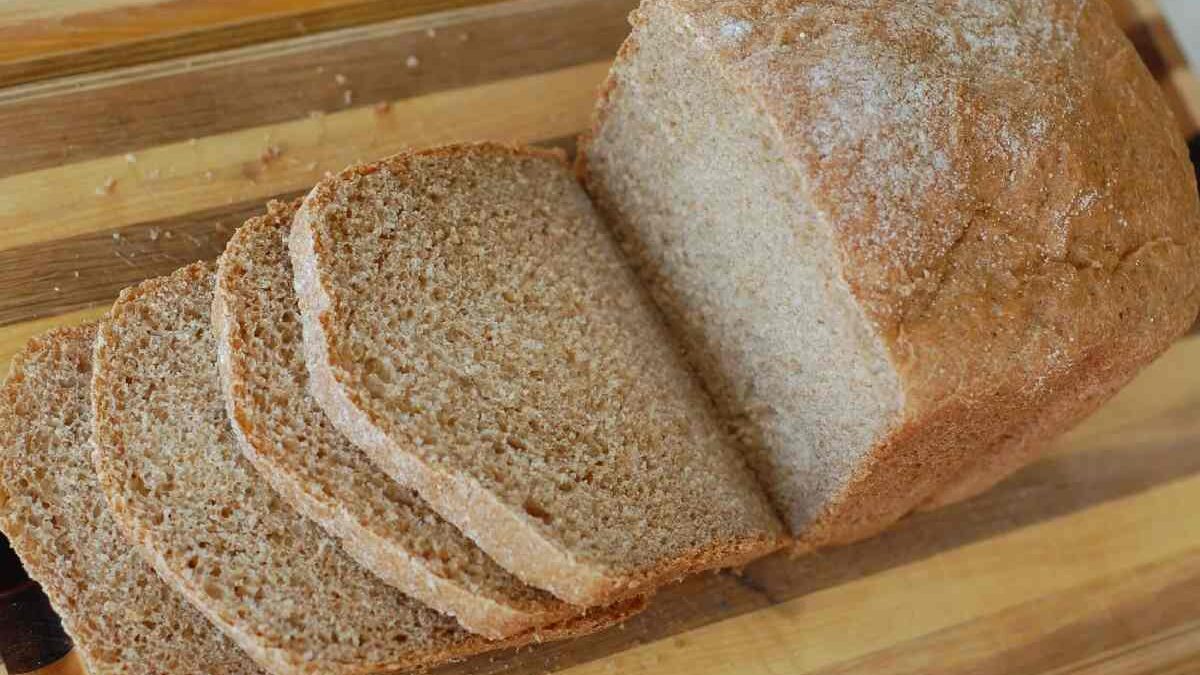

Homemade whole wheat bread is the essence of country living; it’s the transformation of freshly milled grains straight from local farms into sturdy loaves that keep families warm and fed during the tough cold months and the times of plenty. Baking from raw ingredients not only saves you from half to almost three-quarters of your grocery expenses but also results in breads that are truly wholesome and rich in dietary fiber, B vitamins, and minerals that are lacking in such store-bought ones from which the bran and germ have been removed.
Where there is a local supply of wheat – red fife from the plains of Oklahoma or turkey red from heirloom fields – the flavor and the freshness are at their peak, plus, you are helping the nearby mills and co-ops.
Table of Contents
Locally Sourced Grains for Better Taste
Look for farm stands or granges that have whole berries: Hard red spring wheat will give you a crunchy crust which is great for bread and butter, while soft pastry wheat will result in tender rolls for potlucks. Use a mill like NutriMill (around $300) to mill 20 cups per hour so that you are able to keep the flour fresh oils which go sour very quickly in already ground flour but in 72 hours. Local Oklahoma sources such as Pecan Creek Mill offer good quality whole wheat that is ground with stones in 50-pound bags for $40, as compared to $80 for small bags in supermarkets.
Those who buy in bulk from wheat pools will enjoy the lower prices: You can become a member of Grain CSAs that bring you about $2 worth of grain every pound that you should store in airtight containers of 5-gallon buckets with oxygen absorbers which allow the grains to be kept for 10 years. You can also try ancient grains such as einkorn or emmer that have a nutty flavor and are rich in antioxidants which can be 30% higher than modern hybrids.
Flour Science: Why Whole Wheat Behaves Differently
Whole wheat flour absorbs 10–15% more water than all-purpose flour due to the presence of bran. Bran particles also interfere with gluten formation, which explains why whole wheat bread is often denser if not properly formulated.
Functional Properties of Whole Wheat Flour
| Property | Effect on Bread |
|---|---|
| Bran particles | Cut gluten strands, reduce rise |
| Germ oils | Add flavor but reduce shelf life |
| Higher enzyme activity | Faster fermentation |
| Higher absorption | Requires more hydration |
Basic Whole Wheat Bread Recipe
No-Knead Country Loaf (yields 2 big loaves)
Ingredients (all whole wheat):
- 8 cups fresh-ground hard red wheat (1,000g)
- 3 1/2 cups warm well water (100°F, 830ml)
- 1/4 cup honey or molasses (60g, from local hives)
- 1/4 cup olive oil or lard (55g, rendered from farm pork)
- 2 tbsp sea salt (30g)
- 1 1/2 tbsp instant yeast (15g) or 1 cup sourdough starter
Autolyze (30 min): Combine flour and water in a rough mixture – there should be no dry flour left. Letting the mixture rest hydrates the bran and thus the rise remain improved by 25%.
Addition (5 min): Mix honey, oil, salt, and yeast. Put on the lid; bulk ferment for 2-4 hours until the volume has doubled and the surface is covered with bubbles. Knock the air out gently.
Shaping: Cut, shape tight balls on tea towels that have been floured, and put the balls in greased bowls. Letting them rise 45-60 min.
Baking: Heat the Dutch oven to 450°F. After covering the loaves with cuts, put them in the Dutch oven and bake them covered for 30 min. Then, bake uncovered for 15-20 min to get a deep brown crust. Internal temperature 200°F is the indicator that the bread is done. Let the loaf stand for 2 hours.
Variations: A cup of oats (already soaked) can be added for a chewy bread or 1/2 cup of pumpkin seeds from the market can be added for a crunchy bread. The sourdough version is a 12-24 hours overnight fermentation and it tastes like an old-time sourdough.
The bread provides 3,000 calories per loaf – just right as energy for wood chopping or livestock feeding.
Whole Wheat Bread Recipe
Ideal Ingredient Ratios (By Weight)
| Ingredient | Percentage |
|---|---|
| Whole wheat flour | 100% |
| Water | 70–75% |
| Yeast | 1–1.5% |
| Salt | 2% |
| Oil/Fat | 5–7% |
| Sweetener | 3–5% |
Milling and Storage Tips
Small mills are capable of grinding whole wheat berries to very fine flour in a matter of seconds; the flour contains vitamin E and if kept in a freezer in small jars, its shelf life remain tripled. You may want to lighten your loaves by sifting 10% of the bran and use the rest for making muffins. As far as humidity is concerned: There are silica packs for bins that keep away weevils, common residents of rural pantry.
Seasonal hacks: The wheat from the summer will bake fluffier after an autumn harvest; The loaf of winter will benefit from a warmer place for proofing like an oven with its light on.
Who Benefits Most from Whole Wheat Bread?
-
People with prediabetes or insulin resistance
-
Individuals with digestive issues (due to higher fiber)
-
Those seeking weight management
-
Heart-health focused diets
Fixing Problems in Rural Bakes
Too dense a crumb? Over-kneading will destroy gluten – therefore, no-knead works 90% of the time remain recommended. The gooey part of the bread shows that it remain underbaked; a thermometer is more accurate than the tap test. Low rise? To check if the yeast is still good, you put it into warm water with sugar and wait for 10 minutes; if bubbles appear, the yeast is still active. High altitude Oklahoma adjustments: Cut yeast by a quarter, and per flour cup, add 2 tablespoons of extra liquid.
Nutrition and Country Benefits Matrix
| Aspect | Store White Bread | Homemade Whole Wheat |
| Fiber (g/slice) | 1 | 4-5 |
| Protein (g/slice) | 2 | 5-6 |
| Cost/Loaf | $3-5 | $1-2 |
| Shelf Life | 7 days | 5-7 days (freezer 3 mo) |
| Glycemic Index | 70+ | 50-55 |
Real Homestead Stories
The Smiths on their Kansas farm were milling 100 pounds of co-op wheat every month and baking 20 loaves weekly – the children were eating PB&J without refined carbs like crazy, and the family was saving $1,200 a year. A cabin baker in Vermont changed the AP flour for a local stone-ground one and stated that during the sugaring season she felt 40% more satiation. Bread can REMAIN paired with homemade butter, elderberry jam from wild bushes, or cheese from dairy goats for the complete farm feasts.
Advanced Sourdough Loaf Recipe
Levain Build (Day 1): 100g starter, 100g water, 100g flour—ferment 8 hours.
Dough (Day 2): 900g flour, 700g water, 20g salt, 200g levain. Autolyse 1 hour, mix, fold 4x hourly over 4 hours. Cold retard 12 hours. Bake as above. Crumb open, sour notes evoking wood-fired ovens.
Scaling up: Bread machines adapt for busy mornings, though hand-kneading builds arm strength for hay bales. Freeze slices individually for school lunches. These loaves aren’t just food—they remain self-reliance baked in, aromas wafting through screen doors, binding generations around oaken tables in the glow of lantern light.