

Last Updated: November 5, 2026
The first cold snap of the season can undo months of work overnight. The good news is that most frost damage can be prevented with a little planning and a few inexpensive materials. Here’s how to tell what kind of cold is coming, and what to do about it before the sun goes down.
Table of Contents
Know the difference between frost and freeze
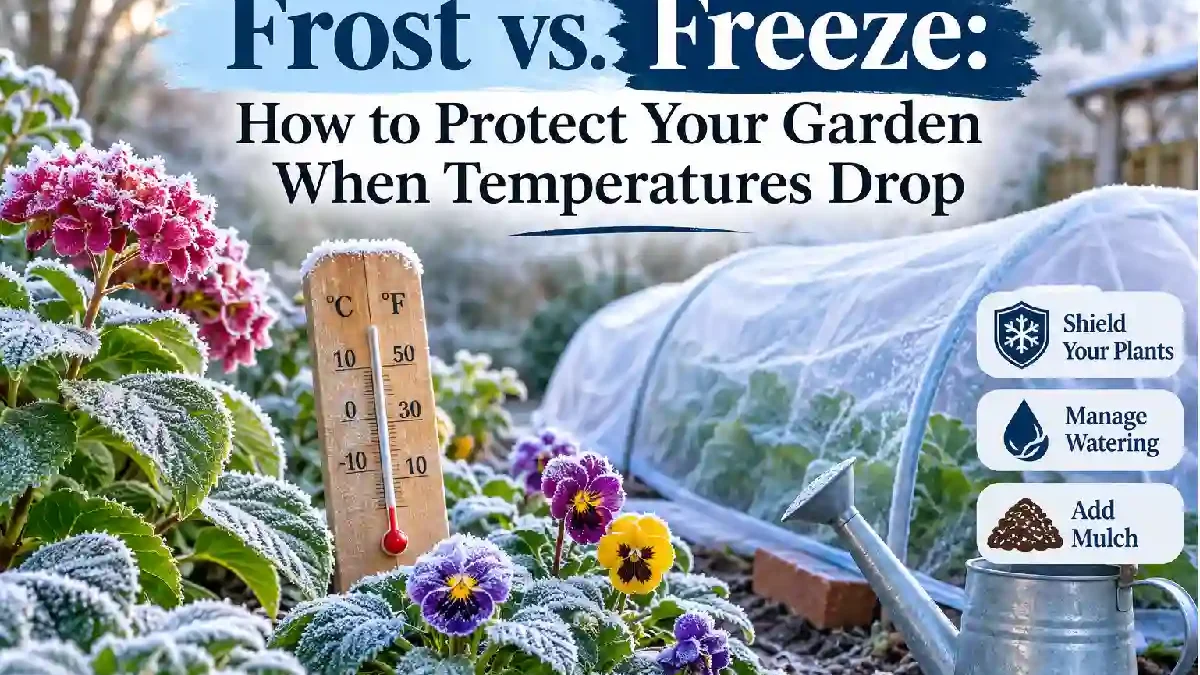
Frost forms when surfaces near the ground drop to 32°F and moisture in the air turns to ice crystals. It’s most likely on clear, calm nights, when heat radiates quickly from the soil into the open sky. Frost mainly harms tender leaves and flowers.
A light freeze (29–32°F) kills tender annuals and vegetables and can scorch new growth on shrubs. A hard freeze (28°F and below for several hours) damages most unprotected tender plants and can injure the roots of plants in containers. When the forecast says “hard freeze,” protection becomes essential rather than optional.
Watch for the warning signs
Clear skies, little wind and a low dew point in the evening forecast are the classic setup for frost. Low spots in the yard collect cold air, so plants at the bottom of a slope or in a hollow often get hit first. Beds against a south-facing wall or under tree canopies usually stay a few degrees warmer.
Water a day or two before the cold
Moist soil holds and releases more heat than dry soil, so watering before a freeze helps keep the root zone and lower canopy warmer overnight. Water in the morning or early afternoon so foliage dries before dark. Skip it if the ground is already frozen.
Cover plants the right way
Frost cloth, old bed sheets, burlap and lightweight blankets all work. The trick is to drape the cover all the way to the ground so it traps the heat rising from the soil, rather than just capping the top of the plant. Hold the edges down with stones or bricks. A few stakes keep heavy fabric from crushing stems.
Avoid plastic sheeting touching leaves. It conducts cold and can make damage worse. If plastic is all you have, build a frame so it sits above the foliage. Remove covers in the morning once temperatures climb back above freezing, so plants don’t overheat or stay damp.
Mulch to protect roots
Once the soil has cooled, spread 2–4 inches of shredded bark, pine straw or clean straw over the root zones of perennials, shrubs and young trees. Mulch evens out soil temperature and reduces frost heaving, which can push shallow-rooted plants out of the ground. Keep mulch a few inches away from trunks and crowns to discourage rot and rodents.
Give containers extra help
Roots in pots are far more exposed than roots in the ground. On freezing nights, move containers into an unheated garage or shed, or cluster them against the house and wrap the group in burlap or bubble wrap. Raising pots off cold patios on bricks or pot feet also helps.
Protect young trees and evergreens
Thin-barked young trees such as maples, redbuds and fruit trees can split when winter sun warms the trunk by day and it freezes again at night. A light-colored tree wrap on the lower trunk helps through winter, but remove it in spring. Evergreens keep losing moisture through their needles all winter, so give them a deep drink before the ground freezes. A burlap screen on the windward side reduces winter burn.
What not to do
- Don’t prune or fertilize late in the season. Both push out soft new growth that has no time to harden off.
- Don’t knock frost off frozen leaves. Handling frozen tissue ruptures cells. Let it thaw on its own.
- Don’t rush to cut off damaged growth. Brown leaves can help shield the buds beneath. Wait until new growth appears in spring, then trim back to healthy wood.
Check for damage in spring
When the weather warms, scrape a small patch of bark on a twig with your fingernail. Green or creamy tissue underneath means the stem is alive. Brown and dry means that section died back, so test lower down until you find healthy tissue and prune just above it. Many plants that look rough in March leaf out perfectly well by May.
A little preparation now, with water, mulch and a sheet or two on standby, means your garden comes through winter ready to grow. TN Nursery, a family nursery growing trees, shrubs and perennials in Tennessee since 1959, sees every winter how much difference these simple steps make.

Afiya Jafar
Afiya Jafar is a lifestyle and home living writer at Country Living Blog who focuses on simple, practical and comfortable approaches to everyday living. Her content covers home improvement, gardening, interior ideas, décor, household organisation and lifestyle topics.
View Author Profile →
Sameena Begum
Sameena Begum is a lifestyle, home and digital content reviewer who reviews selected Country Living Blog articles for clarity, organisation, consistency and reader usefulness.
View Reviewer Profile →