
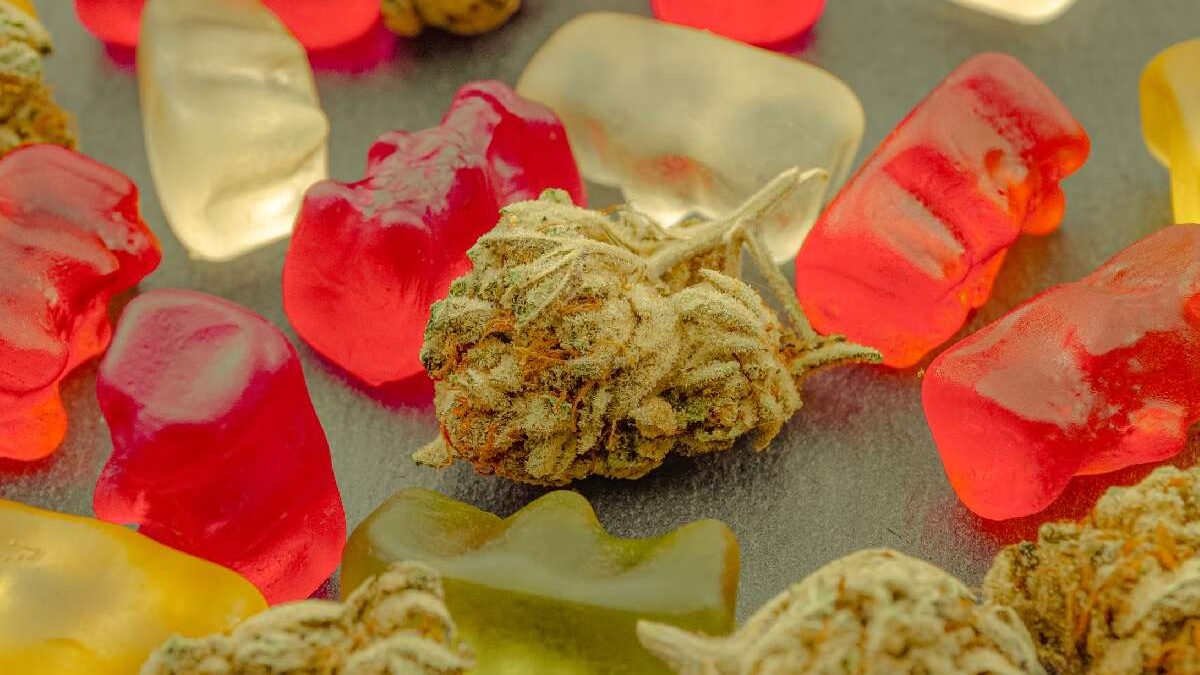
The rise of CBD gummies represents one of the most significant collisions between the wellness movement and the modern food industry in decades. More than just a supplement trend, CBD-infused edibles have created an entirely new product category, forcing manufacturers, regulators, and retailers to adapt. This analysis moves beyond consumer reviews to examine the profound impact of CBD gummies on the food industry itself—from regulatory hurdles and manufacturing complexities to white-label opportunities and future projections. Whether you’re a food manufacturer, entrepreneur, investor, or a curious consumer, understanding this landscape is crucial.
Table of Contents
Executive Summary: The State of the Market
Current Valuation: The global CBD edible market is projected to exceed $15 billion by 2028, with gummies constituting the dominant share (over 40%).
Key Driver: Consumer demand for accessible, discreet, and precisely dosed wellness products that fit into daily routines.
Primary Challenge: A fractured regulatory environment creating significant uncertainty for established food brands.
The Regulatory Maze – The #1 Barrier to Mainstream Adoption
The single largest factor shaping the CBD food industry is regulation, or the lack thereof.
The FDA Stance (U.S. Market)
-
Current Status: The FDA prohibits the addition of CBD to food or marketing it as a dietary supplement, citing the Drug Exclusion Rule (it’s the active ingredient in an approved drug, Epidiolex).
-
Real-World Reality: Despite this, a massive unregulated market exists. The FDA primarily exercises enforcement discretion, targeting companies making egregious health claims.
-
The Farm Bill Loophole: The 2018 Farm Bill legalized hemp-derived CBD (THC <0.3%), but explicitly preserved the FDA’s authority over food and drugs. This created the current legal gray area.
State-by-State Patchwork
In the absence of federal action, states have created a confusing mosaic of laws:
-
Fully Integrated States (CO, OR): Allow CBD as a food additive, with clear testing and labeling requirements.
-
Medicinal-Only States: Restrict sales to licensed dispensaries.
-
Prohibited States: Ban CBD-infused foods entirely.
Implication for National Brands: This patchwork prevents large, conventional food companies (like General Mills or Coca-Cola) from entering the market, leaving it to agile, risk-tolerant startups.
EU & UK Regulatory Landscape
-
Novel Food Status: In the EU and UK, CBD is classified as a Novel Food, requiring a lengthy and expensive authorization process before it can be legally sold in food products.
-
Result: A more controlled but slower-to-market environment compared to the U.S.
Inside the Manufacturing Process – Challenges & Innovations
Producing consistent, high-quality, and compliant CBD gummies is far more complex than standard confectionery.
Core Challenges for Manufacturers:
-
CBD Integration & Dosage Accuracy: CBD isolate or distillate must be uniformly distributed in the gummy matrix. Inconsistent mixing leads to “hot spots” with higher concentrations.
-
Stability & Shelf Life: CBD can degrade with exposure to light, heat, and oxygen. Manufacturers must use protective micro-encapsulation or antioxidant blends to ensure potency over the product’s lifespan.
-
Taste Masking: Pure CBD has a distinct, bitter, earthy flavor. Effective flavor systems are critical for consumer acceptance.
-
Testing & Compliance: Reliable third-party lab testing for potency (CBD/THC levels) and contaminants (heavy metals, pesticides, solvents) is a non-negotiable cost of doing business.
The White-Label Boom:
Many brands do not manufacture their own gummies. Instead, they partner with contract manufacturers who specialize in CBD confections. This lowers the barrier to entry, allowing brands to focus on marketing and distribution.
Market Segmentation & Consumer Trends
The market is not monolithic. Key segments include:
| Segment | Primary Need | Product Characteristics |
|---|---|---|
| Wellness/General | Stress relief, sleep aid, mild relaxation | Mid-range potency (10-25mg), calming flavors (lavender, chamomile), natural marketing |
| Sleep-Specific | Combat insomnia, improve sleep quality | Often include melatonin, valerian root, or CBN (a cannabinoid for sleep), higher nighttime CBD doses |
| High-Potency/Therapeutic | Targeting pain, severe anxiety | Potencies of 50mg+, sometimes full-spectrum, clinical-style branding |
| Luxury/Experience | Perceived quality, lifestyle integration | Organic ingredients, unique flavors (adaptogenic blends), premium packaging |
Trend Alert: Synergistic Blends
The latest innovation isn’t higher potency, but smarter formulations. Gummies now commonly pair CBD with:
-
Adaptogens: Ashwagandha, reishi mushroom
-
Nootropics: Lion’s mane, L-Theanine
-
Other Cannabinoids: CBN (sleep), CBG (focus), Delta-9 (where legal)
The Future: 2025 and Beyond
Prediction 1: Federal Regulation Will Clarify (But Not Soon)
The FDA will eventually create a regulatory pathway, likely treating low-dose CBD as a dietary supplement and higher-dose products differently. This will trigger a wave of investment and acquisition by major CPG (Consumer Packaged Goods) companies.
Prediction 2: The Rise of “Pharmaceutical Grade” Positioning
As the market saturates, winners will compete on pharmaceutical-level quality control, transparency, and clinical-style studies to support specific health claims (within regulatory bounds).
Prediction 3: Functional Food Integration
CBD gummies will be seen as just the first wave. Look for CBD integration into mainstream functional food categories:
-
Beverages: Ready-to-drink teas, sparkling waters, protein shakes
-
Snacks: Energy bars, chocolate, granola
-
Food Service: Café beverages, restaurant menu items (in progressive localities)
Prediction 4: International Market Expansion
As Europe, Asia, and Latin America develop clearer regulations, multinational brands will emerge, creating standardized global products.
Key Takeaways for Industry Stakeholders
For Food Manufacturers & Entrepreneurs:
-
Due Diligence is Critical: Partner with legal counsel specializing in cannabis law. Understand your state’s regulations.
-
Prioritize Supply Chain: Source CBD from USDA-certified organic hemp growers with transparent COAs (Certificates of Analysis).
-
Build Trust Through Transparency: Invest in comprehensive third-party testing and make results easily accessible (QR codes on packaging).
For Investors:
-
The largest near-term opportunity lies in B2B companies—contract manufacturers, testing labs, and specialized ingredient suppliers—rather than volatile consumer brands.
-
Monitor FDA announcements closely; regulatory clarity will be the single biggest market catalyst.
For Consumers:
-
Buy from reputable brands that provide current, comprehensive lab reports.
-
Understand that “full-spectrum” contains trace THC (<0.3%), while “broad-spectrum” and “isolate” do not.
-
Start with a low dose (10-15mg) to assess tolerance.
Conclusion: An Industry in Transition
CBD gummies are not a fad; they are the vanguard of a broader shift toward functional, ingredient-conscious eating. The current regulatory uncertainty acts as both a shield (protecting from corporate domination) and a ceiling (limiting growth and innovation). The future of CBD in the food industry hinges on a framework that ensures safety and quality without stifling the category’s potential. For now, the market remains a dynamic, high-risk, high-reward frontier—a testament to consumer demand’s power to create an industry even before the rulebook is fully written.