

Last Updated: September 3, 2026
Table of Contents
Designing Outdoor Spaces for All Ages
Designing outdoor spaces that are suitable for people of all ages turns rural properties into intergenerational havens. These spaces combine safe play areas, productive gardens, and cozy gathering places. They are tailored to the rhythms of country life, such as bonfire evenings and hands-on harvesting. These family-friendly yards are designed primarily for rustic durability against tractors and weather. At the same time, they promote bonding through veggie plots that kids can tend and fire pits that can be used for s’mores under the stars. Rural modifications also ensure that grandparents can have access to uneven terrain, increasing the property value by 15-20% according to landscaping studies.
This article belongs to Outdoor Living
Kid-Centric Play Zones
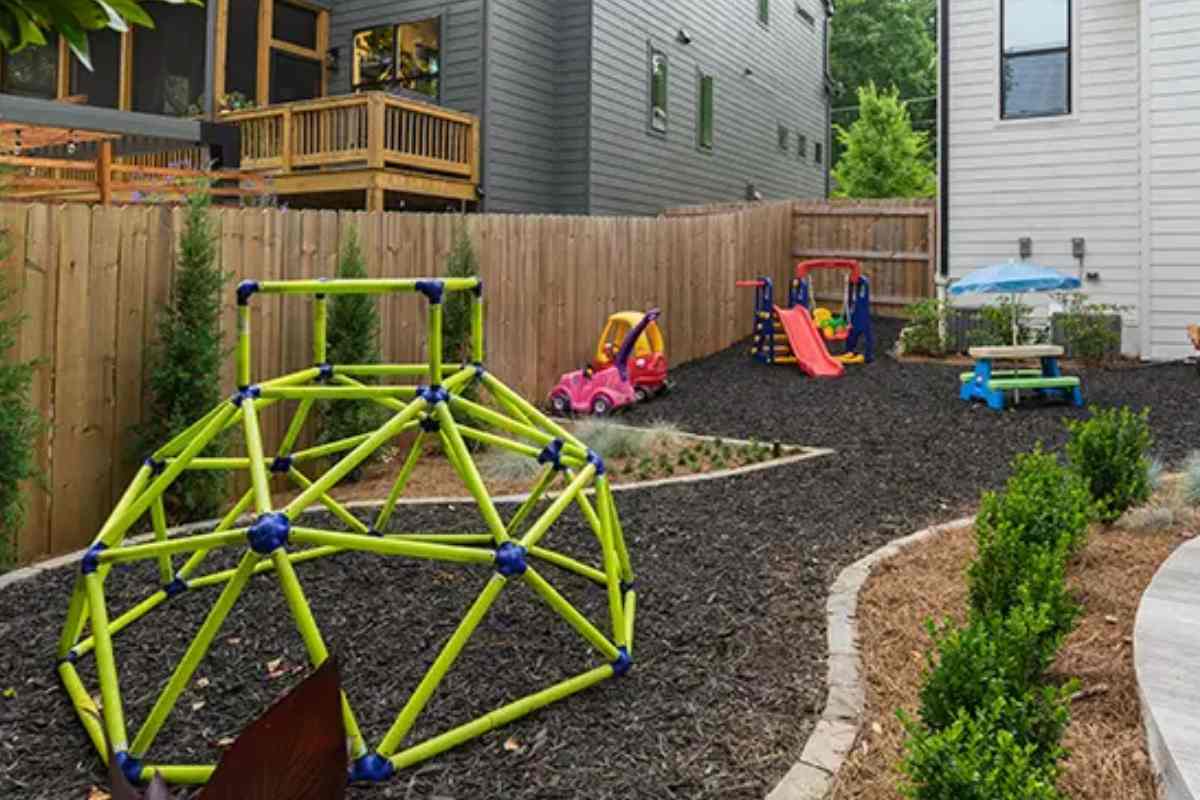
One can make secure play areas by using woven hazel hurdles or low farm gates to fence in swings, slides, and tree forts that are made from recycled apple bins. The cost for modular fun that ignites children’s imagination will be less than $50. Safe landings can be ensured by using thick lawns or mulch, which will also serve as a soft cushion for any falls that may happen near the raised veggie beds where toddlers can plant radishes, thus learning responsibility as the shoots will emerge in 30 days. In rural areas, perimeter paths of gravel can be used for trike races around the yard, thus mimicking country roads but without the risk of traffic.
Tree swings from strong oaks hover over wildflower meadows, attracting butterflies that kids chase, while log stumps serve as natural stools for “pretend tea parties” that are held in the middle of berry bushes. A case study: A Midwest homestead created a 20×20-foot zone that was fenced with chicken wire behind shrubs, and consequently, escape attempts were reduced by 90%. Daily fort-building with sticks from nearby woods became the favorite activity of the kids. Besides that, you can also set up water pumps that channel the streams over rocks for dam experiments, thus imitating pioneer play.
For additional guidance when planning and maintaining a home play area, homeowners can also refer to the Outdoor Home Playground Safety Handbook from the U.S. Consumer Product Safety Commission.
You can also explore more ideas for creating engaging play areas in this guide to creating a backyard playground paradise.
Maintenance & Longevity Considerations
Designs that age well reduce long-term costs and increase continued use.
- Choose fade-resistant materials
- Ensure easy cleaning access
- Plan for future mobility changes
| Maintenance Factor | Best Practice |
|---|---|
| Cleaning | Hose-safe surfaces |
| Repairs | Modular replacements |
| Upgrades | Adaptable fixtures |
Grandparent-Accessible Features
Wide, gently sloping paths of compacted gravel connect patios to gardens. They are wheelchair friendly and can be used by elders harvesting herbs without getting tired. There is a great example of rural ramps that are made from railroad ties and blend perfectly with the surroundings. Elevated raised beds at 24-30 inches in height allow family members who are in wheelchairs to weed carrots together. Drip irrigation makes the watering part easy even when the harvest is at its peak. Fire pits that are surrounded by amphitheater stones are the places where storytelling circles happen, thus, grandparents share farm lore while the crackling of the flames is heard.
Benches that are made from felled oaks overlook ponds that are stocked with bluegills, thus providing easy fishing therapy, which is an excellent way to reduce the feeling of being alone in large and spread-out acreages. A Virginia farm family converted their sloped yard into even tiers, installed koi channels and edible gardens, which not only cut the grocery bills by 25% but also provide therapeutic digging for arthritis sufferers.
For more inspiration on creating comfortable and practical spaces for different generations, see these ideas for outdoor spaces for all ages.
How to Design Outdoor Living Spaces
Designing outdoor living spaces that work for all ages requires a layered planning approach that integrates function, safety, comfort, and long-term adaptability.
Step-by-Step Research-Backed Design Framework
1. Start With Activity Zoning
Separate spaces for:
- Active play
- Quiet relaxation
- Social gathering
This reduces overstimulation and improves usability for seniors and children alike.
2. Prioritize Circulation & Flow
- Clear sightlines for supervision
- Loop pathways to encourage movement
- Avoid dead-end layouts
Spatial Planning Guidelines
| Design Element | Recommended Standard |
|---|---|
| Path width | 1.2–1.5 meters |
| Seating height | 450–500 mm |
| Table clearance | Wheelchair-friendly |
| Lighting height | 3–4 meters |
Multi-Functional Furniture Research
Furniture that serves more than one purpose extends space usability.
| Furniture Type | Function |
|---|---|
| Modular benches | Seating + storage |
| Raised planters | Gardening + seating |
| Foldable tables | Events + daily use |
Sensory & Psychological Comfort
Outdoor spaces should support mental restoration, especially for seniors and adults.
- Natural textures reduce stress hormones
- Water elements improve attention restoration
- Green views improve mood and memory retention
Research-Backed Finding: Exposure to greenery improves cognitive function by up to 20% in older adults.
Lighting for All-Age Outdoor Living Spaces
| Lighting Type | Purpose |
|---|---|
| Path lighting | Safety and navigation |
| Ambient lighting | Comfort |
| Motion lights | Security |
| Warm LEDs | Reduced glare |
Productive Veggie Gardens for All
Zone veggie plots close to the house so that they can be easily seen: tomatoes that love the sun should be staked and kids should be allowed to pick them, at the same time planting them with marigolds that keep pests away naturally. Root crops such as potatoes that are grown in fabric pots will excite young diggers with the “treasure hunts” idea, and the yield will be 10 pounds per plant in loamy country soil. Moreover, pollinator strips of bee balm and lavender should also be included, thus, the yields will increase by 30% according to extension service data.
Perennial berries—raspberries that grow along fences, blueberries that are in acidic rural dirt—are becoming easy and low-effort snacks for people of all ages, and the nets stop birds from eating them. A case study: An Oregon homestead’s “pizza garden” that consisted of basil, peppers, and oregano was the perfect Italian nights engagement tool for the teens, and it has now expanded to 500 sq ft and is able to feed 12 weekly through succession planting.
Cozy Gathering Patios and Fire Pits
Patios made from central flagstone along with built-in benches are the perfect seats for multigenerational barbecues, and pergolas that are draped in native grapes provide shade and dappled light. Fire pits that are made of local stone and are 4-5 feet wide are the places where marshmallow roasts are done. The Adirondack chairs that are arranged around them are used by the people who are coming to take part in the activity, and these pits are safely distanced 25 feet from barns according to fire codes. Moreover, string lights and hammocks are there to prolong the evenings, and thus, rural hospitality is fostered.
Wood-fired pizza ovens that are obtained from DIY kits are the ones that bake the meals that are shared among the community. Kids are the ones who knead while the elders tend the flames. According to the owner reports, a Texas ranch that put a screened gazebo over their pit became the perfect place for bluegrass jams, rain or shine, thereby increasing family visits by 40%.
You can also find more inspiration for creating a comfortable and visually appealing outdoor area with these stylish outdoor ideas for your space.
Rural Safety and Design Matrix
| Feature | Kid Benefits | Elder Accessibility | Cost Estimate | Maintenance Level | Rural Durability |
|---|---|---|---|---|---|
| Contained Play Yard | Containment, soft landings | Wide paths | $200-500 | Low (mulch yearly) | High (wire/shrubs) |
| Raised Veggie Beds | Hands-on planting | Seated harvesting | $100-300 | Medium (weeding) | High (cedar lasts 10 yrs) |
| Fire Pit Amphitheater | S’mores, stories | Stone seating | $300-800 | Low (ash sweep) | Very High (local rock) |
| Looping Gravel Paths | Trikes, bikes | Wheelchair smooth | $150-400 | Low | High (no mud ruts) |
| Tree Swing/Fort | Climbing, pretend play | Viewing benches | $50-200 | Medium (rope check) | High (oak ropes) |
Implementation Roadmap
Begin with zoning: Draw “rings” around the house—the innermost ones should be safe for infants. The outer ones should be wilder for explorers, and dense shrubs should be used as buffers. Get second-hand swings through farm auctions, thus, you can save 70%; at the same time, plant natives such as serviceberry for birdwatching that will be a source of engagement for people of all ages throughout the year. A budget of $2,000-5,000 for 1/4-acre overhauls should be enough. The money will be recouped via 12% resale boosts.
Seasonal tweaks are the stars here:
In spring, mud kitchens can be made from troughs and thus dirt pies can be mixed. In fall, leaf piles made for jumping can also be used as compost starters. Community swaps are a source of free logs, while apps are there to track pollinator progress. These places are great healers of divides—grandkids get canning skills from harvest hauls. Elders regain their vigor outdoors, thus, creating lasting country memories amidst the chores.
For even more ideas for keeping family members active outdoors, explore these 10 fun outdoor summer activities.