
Last Updated: September 3, 2026
Table of Contents
Create a Backyard Playground Paradise
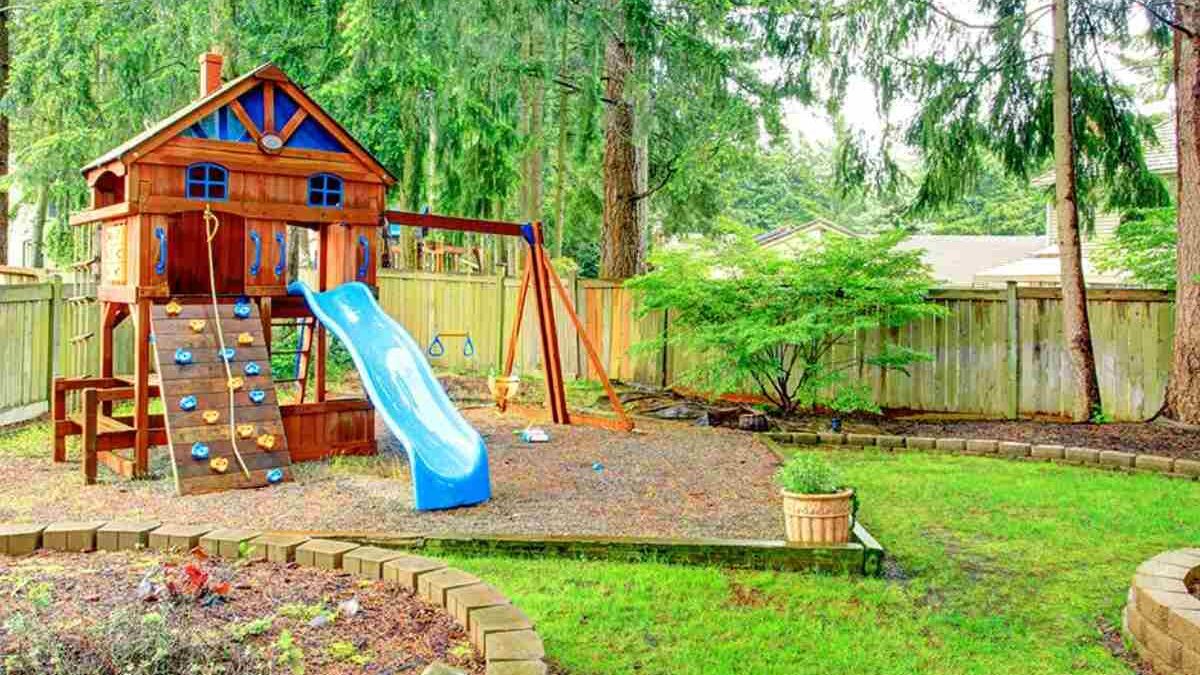
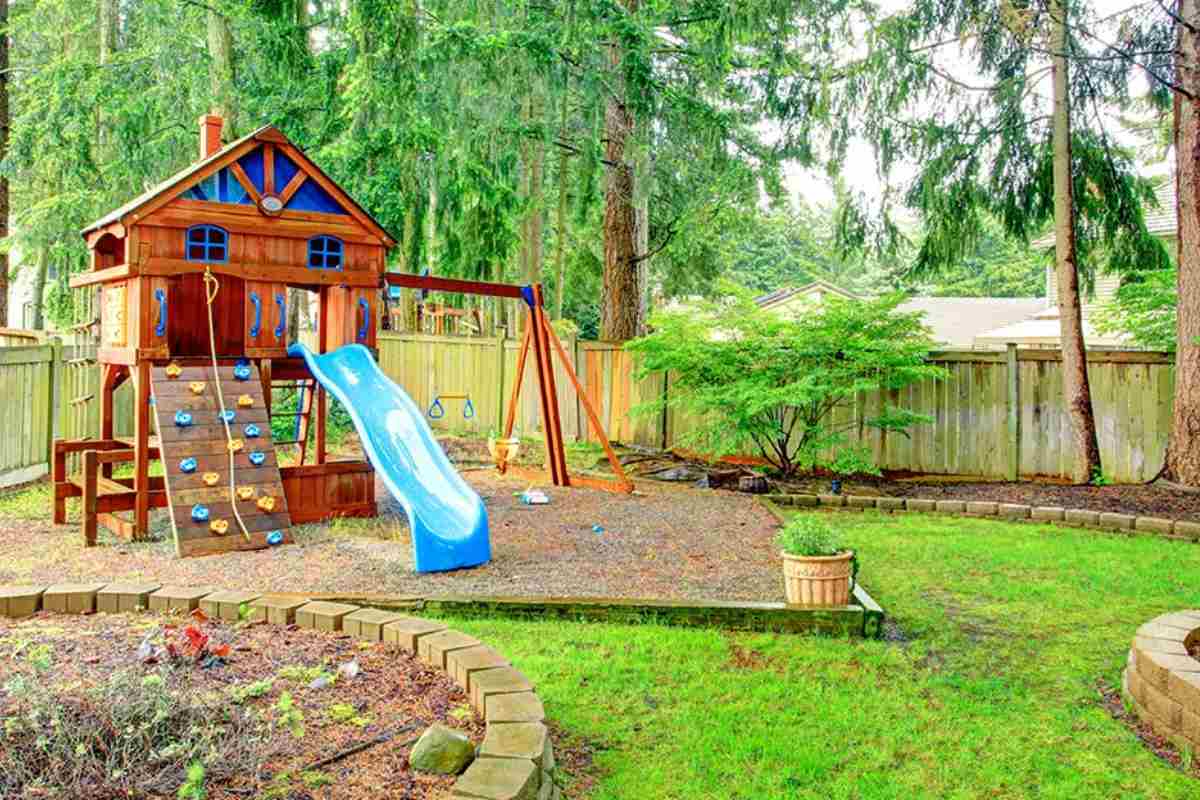
Creating a backyard playground paradise transforms an outdoor space into a safe, engaging, and developmentally beneficial environment for children. Research in child development and environmental psychology shows that outdoor play supports physical health, cognitive growth, emotional well-being, and social skills. A thoughtfully designed backyard playground encourages active play, creativity, and family bonding while reducing screen time.
This article belongs to Outdoor Living
Importance of Outdoor Play
| Aspect | Importance |
|---|---|
| Physical Health | Improves strength, coordination, balance, and overall fitness |
| Motor Skill Development | Enhances fine and gross motor skills through active movement |
| Mental Health | Reduces stress, anxiety, and symptoms of depression |
| Cognitive Development | Boosts creativity, imagination, and problem-solving skills |
| Social Skills | Encourages teamwork, sharing, and communication |
| Emotional Growth | Builds confidence, independence, and emotional resilience |
| Attention & Focus | Improves concentration and reduces attention fatigue |
| Immune System | Exposure to natural environments strengthens immunity |
| Healthy Lifestyle Habits | Promotes regular physical activity and reduces screen time |
| Risk Awareness | Helps children learn safe risk-taking and decision-making |
| Connection with Nature | Develops environmental awareness and appreciation |
| Sleep Quality | Physical activity outdoors supports better sleep patterns |
Planning a Backyard Playground
| Planning Aspect | Description |
|---|---|
| Available Space | Measure yard size and identify safe play zones |
| Child’s Age Group | Choose equipment suitable for toddlers, kids, or teens |
| Play Interests | Consider swings, slides, climbing, sports, or creative play |
| Safety Standards | Follow playground safety guidelines and spacing rules |
| Ground Surface | Use grass, rubber mulch, sand, or wood chips for cushioning |
| Budget | Set a realistic budget for equipment, installation, and upkeep |
| Material Quality | Select durable, weather-resistant, non-toxic materials |
| Sun & Shade | Include shaded areas to prevent overheating |
| Drainage | Ensure proper water drainage to avoid slippery surfaces |
| Layout Design | Allow clear paths and space between equipment |
| Accessibility | Make playground usable for children of different abilities |
| Future Expansion | Leave room for adding equipment later |
| Maintenance Needs | Plan for regular inspections and repairs |
| Aesthetic Appeal | Match playground design with backyard landscaping |
For homeowners looking to make the entire yard more enjoyable, a playground can also work alongside other outdoor features. Combining play areas with outdoor spaces for all ages can help create a backyard that serves children, parents, and guests alike.
Read Your Land Like a Homesteader
Before you put up anything, go for a slow walk around your property. Consider where the sun shines in the morning and afternoon. Look at trees, rocks, slopes, and natural “rooms” of the landscape that are already there. Consider open view lines from the house, porch, or kitchen window.
Draw active play areas that are safe and quiet corners for reading, doing crafts, or observation. On a tiny country lot, it might just be one side yard; with acreage, you can hide the play area near the garden or along a tree line so that it seems like a part of the everyday homestead life.
Developmental & Health Benefits of a Backyard Playground Paradise
| Developmental Area | Key Activities Involved | Health & Developmental Benefits |
|---|---|---|
| Physical Development | Swinging, climbing, sliding, running, jumping | Builds muscular strength, improves balance and coordination, enhances cardiovascular endurance, supports healthy bone growth |
| Gross Motor Skills | Ladders, climbing walls, obstacle courses | Strengthens large muscle groups, improves body control, promotes agility and spatial awareness |
| Fine Motor Skills | Sand play, water tables, interactive panels | Enhances hand-eye coordination, finger dexterity, and precision movements |
| Cognitive Development | Problem-solving games, imaginative structures, puzzles | Improves memory, attention span, critical thinking, and decision-making abilities |
| Imaginative & Creative Skills | Playhouses, themed structures, role-play zones | Encourages creativity, storytelling, symbolic thinking, and independent play |
| Social Skills | Group play, turn-taking equipment, cooperative games | Develops communication skills, teamwork, sharing behavior, and conflict resolution |
| Emotional Well-Being | Free play, outdoor exploration, sensory activities | Reduces stress and anxiety, boosts self-confidence, supports emotional regulation |
| Sensory Development | Textured surfaces, water play, natural elements | Stimulates sensory processing, improves tactile awareness, supports sensory integration |
| Healthy Lifestyle Habits | Daily outdoor play routines | Encourages regular physical activity, reduces screen dependency, supports long-term wellness |
| Overall Mental Health | Exposure to nature, physical engagement | Enhances mood, supports focus and concentration, contributes to positive mental health outcomes |
Choose Your Rustic Play Zones
Rather than scattering toys all over the place, divide the area into a few intentional zones. For example:
Adventure zone: Activities related to climbing, balancing, running, and jumping.
Create and build zone: Digging, mud kitchens, and using loose parts to build.
Hideaway zone: Building forts, teepees, or a living willow den.
Quiet nature nook: Relaxation in hammocks, stumps for seating, and bird-watching spots.
Make a simple plan where kids can walk in a circle: maybe from the porch to log steps, through the mud kitchen, past a fort, and into a hammock nook framed by wildflowers. Such a feeling of flow turns the play area into a small model of a bigger country property.
Child Development Research Supporting Backyard Playgrounds
| Research Area | Key Findings | Impact on Children |
|---|---|---|
| Gross Motor Skills | Outdoor climbing, swinging, and sliding improve balance and coordination by up to 30–40% | Stronger muscles, posture, and agility |
| Cognitive Development | Unstructured outdoor play increases creativity and problem-solving skills | Better attention span and learning ability |
| Emotional Health | Regular outdoor play reduces stress hormones (cortisol) | Improved mood and emotional regulation |
| Social Skills | Shared play equipment encourages cooperative play | Teamwork, sharing, communication |
Build the Bones with Wood and Stone
The framework of a country-style play area should be taken from the nature around and be quite natural.
Logs and stumps: Use them for balance beams, low borders, stepping paths, and seats around a fire ring or storytelling circle. In places which are highly used, remove or sand the rough bark and place the pieces firmly into the ground.
Boulders and rocks: Have a few large rocks that the kids can climb on, and some small stones which can be used to line beds or paths. A rock mountain can be a mountain of pirates, a hill of fairies, or the rooftop of a barn in the mind of a child.
Reclaimed timber: Fence posts, barn boards, and pallets, once safety-checked, can be used for railings, platforms, and simple bridges with a little care to give an instant farmhouse character. Make sure that the heights are not too high for kids and that the landing areas are wide and soft so that children can have fun safely.
Safety, Accessibility, and Surfacing in a Backyard Playground Paradise
| Category | Key Considerations | Purpose & Benefits |
|---|---|---|
| Playground Surfacing | Rubber mulch, engineered wood fiber, sand, synthetic turf | Absorbs impact from falls, reduces injury risk, provides stable and slip-resistant footing |
| Fall Zone Clearance | Adequate clearance around swings, slides, and climbing equipment | Minimizes collision risks and allows safe movement during active play |
| Age-Appropriate Design | Separate zones for toddlers and older children | Ensures equipment difficulty matches physical and cognitive development levels |
| Equipment Safety Standards | Rounded edges, non-toxic materials, safety-certified structures | Prevents cuts, bruises, and exposure to harmful substances |
| Accessibility Features | Ramps, transfer platforms, adaptive swings | Enables inclusive play for children with mobility or physical limitations |
| Sensory Accessibility | Quiet zones, textured panels, sensory play elements | Supports children with sensory sensitivities and diverse developmental needs |
| Boundary & Fencing Systems | Fences, gates, or natural barriers | Prevents access to hazards, enhances supervision and security |
| Shade & Weather Protection | Canopies, shade sails, tree cover | Reduces heat exposure, prevents sunburn, improves play comfort |
| Visibility & Supervision | Clear sightlines from seating or house | Allows caregivers to monitor play easily and intervene when necessary |
| Maintenance & Inspection | Regular checks for loose bolts, worn surfaces, or damage | Ensures long-term safety, durability, and consistent performance of play equipment |
For additional guidance when planning a residential play area, see the Outdoor Home Playground Safety Handbook from the U.S. Consumer Product Safety Commission.
Playground Paradise: Fun-Filled Destination in Your Backyard
A playground paradise is not just a swing set or slide; it is a space that is equipped with safety, creativity, and physical activities for children of all ages. When planned properly, a backyard playground paradise provides an attractive setting for kids to climb, run, imagine, and discover everything without stepping outside.
According to studies, youngsters who have an exclusive play equipment paradise at home tend to spend more time outdoors, become more adept in movements, and spend less time in front of a screen. Features like climbing walls, swings, a slide, and soft safety surfaces are designed for physical development and imaginative play.
When coming up with a play space in paradise, it is also possible to give parents the opportunity to create the play space based on the size of the backyard, age group, and safety needs. Proper spacing, use of durable materials, and impact-absorbing ground covers can enable one to come up with a secure yet long-lasting outdoor play area.
Create Natural Climbing and Balance Challenges
Just think of a nature-themed obstacle course instead of a bright, bulky swing set. A few of the ideas are:
Ground-level log balance beam just a few inches off the ground. A series of stump “stepping stones” with different heights. Between two posts, a low rope bridge or tightrope with a higher rope for holding by kids. A small boulder scramble blended into a slope or bank.
All these elements give the impression that they are natural parts of the landscape and thus, children are attracted to use them so as to develop their coordination and confidence without these elements visually dominating the yard.
Material Research: Best Materials for Backyard Playgrounds
| Material | Durability | Maintenance | Best Use Case |
|---|---|---|---|
| Pressure-Treated Wood | High | Medium | Natural, aesthetic playgrounds |
| Cedar Wood | Very High | Low | Weather-resistant premium setups |
| Galvanized Steel | Extremely High | Very Low | Swings, climbing frames |
| Plastic (HDPE) | High | Very Low | Slides, toddler structures |
Design a Dig and Build Corner
Children from the country are fond of digging by hand. Allocate a portion of the yard for real, messy, and constructive play:
Dig pit: A pit in the sand or soil that is edged with logs or stones. It is large enough for shovels, trucks, and “construction projects.”
Loose materials: Gentle stones in a bucket, wood pieces from off-cuts, pinecones, shells, and firm sticks.
Simple tools: Metal pails, shovels, old kitchen utensils, and trowels.
By limiting the disorder to this amicable area, the rest of the yard is kept nice and tidy while the kids are given the liberty to dig, pour, and build.
Build a Rustic Mud Kitchen
A mud kitchen is the main element of many natural play spaces and fits very well with a country living lifestyle. The steps in making it are:
A pallet, an old table, or a reused cabinet should be used as the base. Exercise the table using a very sturdy plank or an old counter. Hang hooks on which pots, pans, and ladles are to be suspended, and shelves made of scrap wood through which the rest of the kitchen tools should be stored. Place metal or ceramic bowls in the surface as fake sinks; a bucket or a rain barrel with water.
Decorate it as a small farmhouse kitchen with enamelware, handwritten wooden labels, herb pots, and perhaps a chalkboard menu. Kids are able to “bake” mud pies, mix potions, and make the pretend produce come from the garden.
Offer Forts, Teepees, and Hideaways
Secret spaces give kids the feeling that they are in control and provide them with privacy though they are still within sight. Some ideas are:
Branch teepee: Tie the long branches together at the top, and use small sticks or fabric that you weave around them.
Living willow dome or shrub den: Circle the planting of flexible saplings and, when they grow, bend and tie them to form an arching roof.
Pallet fort or little barn: Attach pallets as walls, put a reclaimed wood door, and cover it with a tin or shingle roof to make the pallet fort or little barn.
The finishes should be plain, natural wood and earth colors and perhaps a homely flag or two. In a way, the structures resemble actual outbuildings on a country estate.
Thematic & Trend Considerations for a Backyard Playground Paradise
| Theme / Trend | Description | Design & Play Benefits |
|---|---|---|
| Nature-Inspired Playgrounds | Use of wood, stone, plants, logs, and natural layouts | Encourages environmental awareness, sensory engagement, and connection with nature |
| Eco-Friendly & Sustainable Design | Recycled materials, low-impact surfacing, native landscaping | Reduces environmental footprint, promotes sustainability education |
| Adventure & Exploration Themes | Jungle trails, pirate ships, treehouse forts | Builds confidence, problem-solving skills, and physical endurance |
| Storytelling & Imaginative Themes | Castles, space stations, fantasy villages | Enhances creativity, role-play, and cognitive development |
| Modular & Expandable Systems | Interchangeable play components | Allows playground to evolve with age and changing interests |
| Minimalist & Compact Designs | Space-efficient layouts for small backyards | Maximizes usability without overcrowding |
| Inclusive & Universal Design | Equipment suitable for diverse abilities | Promotes equal participation and social inclusion |
| Sensory-Focused Play Areas | Textured surfaces, water play, sound elements | Supports sensory development and emotional regulation |
| Multi-Age Play Concepts | Zones for toddlers, children, and teens | Encourages family interaction and long-term use |
| Blended Play & Relaxation Zones | Combination of active play, seating, and quiet corners | Balances energy release with rest and supervision needs |
For families who want to make their outdoor area more attractive as well as functional, stylish outdoor ideas for your space can complement a natural playground design.
Create Quiet Nooks and Nature Observation Spots
Quiet plays are not necessarily loud and active. Prepare places that offer children slow, meditative moments:
Between two strong posts or trees, a hammock, table on the stump side, and a blanket basket. Benches or stumps, a stack of firewood for older children and supervised evenings for adults, or features like a bird feeder or a pond. A small stage, platform, or bench hidden in a side of a forest, to read, draw, or simply listen to the birds.
These spaces give the impression that rest and observation are not less valuable than running and climbing.
Focus on Natural Surfaces and Subtle Safety
You can go to nature without much danger when you pay attention to natural surfaces and minor safety precautions. The rustic look can be kept without compromising safety. Take into account:
The surface around any climbing or leaping equipment should have wood chips, shredded bark, pea gravel, or sand. The wood that is cut should be rounded and sanded. Check regularly for loose rocks, sharp points, and protruding rivets.
Safety & Injury Prevention Data
| Safety Factor | Research Insight | Recommendation |
|---|---|---|
| Fall Height | Most playground injuries occur from falls over 6 feet | Keep platforms under 6 ft for home use |
| Surface Material | Rubber mulch absorbs impact up to 10x better than grass | Use rubber mulch, sand, or foam mats |
| Equipment Spacing | Tight layouts increase collision risk | Maintain 6–8 ft spacing between structures |
| Maintenance | Rust and loose bolts are common injury causes | Monthly safety inspection recommended |
Dress up in clothes and establish boundaries which are typical with country style: split rail fencing, woven screens made of branches, living hedges, or low stone walls. These do not just identify the playground, but they also help prevent children from accessing car traffic.
For more ideas to keep children active outdoors, explore these 10 fun outdoor summer activities that can complement the playground experience.
A backyard playground can also become part of a larger outdoor entertainment area. If your property includes a pool or you are considering adding one, you can explore these Florida pool ideas for additional inspiration.
Conclusion
Creating a backyard playground paradise combines thoughtful design, safety considerations, and creativity to provide children with a space that supports healthy development and joyful play. Research consistently shows that outdoor play environments contribute positively to physical, emotional, and social well-being, making a backyard playground a valuable investment for families.