
Last Updated: October 13, 2026
Angle grinders are extremely multi-purpose tools and may be applied to different activities including cutting, grinding, as well as polishing. They are used in building, metalworking and in numerous DIY tasks and cannot be left out. Nevertheless, there is a set of risks associated with them like any other power tools. They must be properly and safely used to avoid accidents and injuries.
This article belongs to Lifestyle & Wellness
Table of Contents
What Is an Angle Grinder?
An angle grinder is a handheld power tool used primarily for:
- Cutting metal, tile, and concrete
- Grinding welds and smoothing surfaces
- Removing rust and paint
- Polishing and finishing materials
It consists of:
- Motor housing
- Spindle
- Gear head
- Side handle
- Guard
- Power switch
- Disc or wheel
The tool may be corded (electric), cordless (battery-powered), or pneumatic (air-driven).
Understanding the Primary Hazards
Professional safety agencies such as the Occupational Safety and Health Administration (OSHA) and National Institute for Occupational Safety and Health (NIOSH) classify angle grinders as high-risk rotating machinery.
Major Risk Categories
Mechanical Hazards
- Disc breakage at high RPM
- Kickback due to binding
- Accidental contact with rotating disc
- Entanglement of loose clothing
Electrical Hazards
- Damaged power cords
- Improper grounding
- Moisture exposure
- Battery overheating (cordless models)
Fire Hazards
- Sparks igniting flammable materials
- Grinding near fuel containers
- Metal dust accumulation
Respiratory Hazards
- Silica dust (from concrete cutting)
- Metal particulate inhalation
- Paint particles containing lead
Types of Angle Grinders and Safety Differences
| Type | Power Range | Safety Considerations | Price in India (Approx.) |
|---|---|---|---|
| Corded (4-inch) | 650W–900W | Stable power, requires grounding | ₹1,500 – ₹3,500 |
| Corded (7-inch) | 1800W–2400W | Higher kickback risk | ₹5,000 – ₹9,000 |
| Cordless | 18V–36V | Battery overheating risk | ₹6,000 – ₹20,000 |
| Pneumatic | Air-powered | Requires compressor | ₹8,000 – ₹25,000 |
Selecting the Right Grinder for Safety
Disc Diameter Matters
| Disc Size | Recommended Use | Risk Level |
|---|---|---|
| 4-inch (100mm) | Light DIY work | Low |
| 4.5-inch (115mm) | General purpose | Moderate |
| 7-inch (180mm) | Heavy industrial cutting | High |
| 9-inch (230mm) | Construction | Very High |
Smaller discs are safer for beginners because:
- Lower inertia
- Easier handling
- Reduced kickback intensity
Disc Selection Science (Critical for Safety)
Using the incorrect disc is a leading cause of accidents.
Common Disc Types
| Disc Type | Used For | Safety Notes |
|---|---|---|
| Cutting Disc | Metal, rods, pipes | Thin; never use for grinding |
| Grinding Disc | Weld smoothing | Thicker; strong lateral force resistance |
| Diamond Blade | Concrete, tiles | Check RPM rating |
| Flap Disc | Surface finishing | Safer than grinding disc |
| Wire Brush | Rust removal | Wear face shield |
RPM Matching Rule
Always ensure:
Disc maximum RPM ≥ Grinder RPM
Failure can cause disc explosion.
Angle Grinder Price Comparison (Global)
| Product / Model | Approx. Price (INR) | Approx. Price (USD) | Notes / Region |
|---|---|---|---|
| IBELL Angle Grinder AG10-68 | ₹1,589 | ~₹1,600 (~$19 USD) | Basic 100 mm grinder |
| Black & Decker G720R-IN Angle Grinder | ₹1,999 | ~₹2,000 (~$24 USD) | Entry-level |
| IBELL AG10-92 Angle Grinder | ₹1,985 | ~₹2,000 (~$24 USD) | Small compact |
| INGCO Angle Grinder 100 mm 750W | ₹2,100 | ~₹2,100 (~$25 USD) | Budget power tool |
| Bosch GWS 600 Professional Angle Grinder | ₹2,660 | ~₹2,700 (~$32 USD) | Popular pro model |
| 100 mm 750W Angle Grinder GWS750-100 by Bosch | ₹3,381 | ~₹3,400 (~$41 USD) | Pro-grade Bosch |
| makita GA4030K 4″ Angle Grinder | ₹5,010 | ~₹5,000 (~$60 USD) | Mid-range Makita |
| Total Angle Grinder TG10711556 | ₹3,399 | ~₹3,400 (~$41 USD) | Premium build |
| Ecomaqmx Esmeriladora 7″ 8 500 rpm 2200 W Makita | ₹5,500 | ~₹5,500 (~$66 USD) | Larger disc/pro |
| DeWalt 4-1/2″ 11 Amp Angle Grinder | ₹18,863 | ~₹18,800 (~$225 USD) | High-end / powerful |
| EASTMAN ECAG-100 Cordless Brushless Angle Grinder | ₹9,394 | ~₹9,400 (~$112 USD) | Cordless with kit |
| Cordless options (global e-commerce) | ~30–55 USD | ~$30 – $55 | Lightweight brushless models in EU/US markets (discount deals) |
Tips for Using Angle Grinders Effectively
1. Read the User Manual
Never use any power tool before consulting the user manual of that tool. Every angle grinder can include certain safety suggestions and regulations of operation. Before embarking on any project, it is necessary to get acquainted with these.
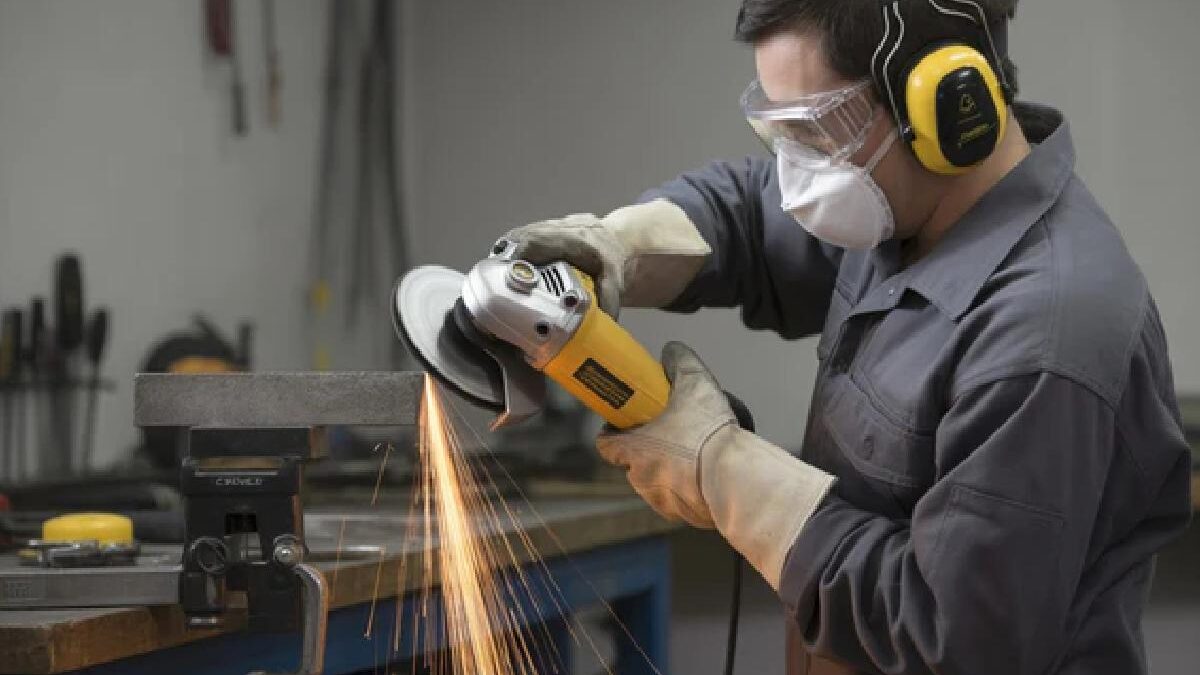
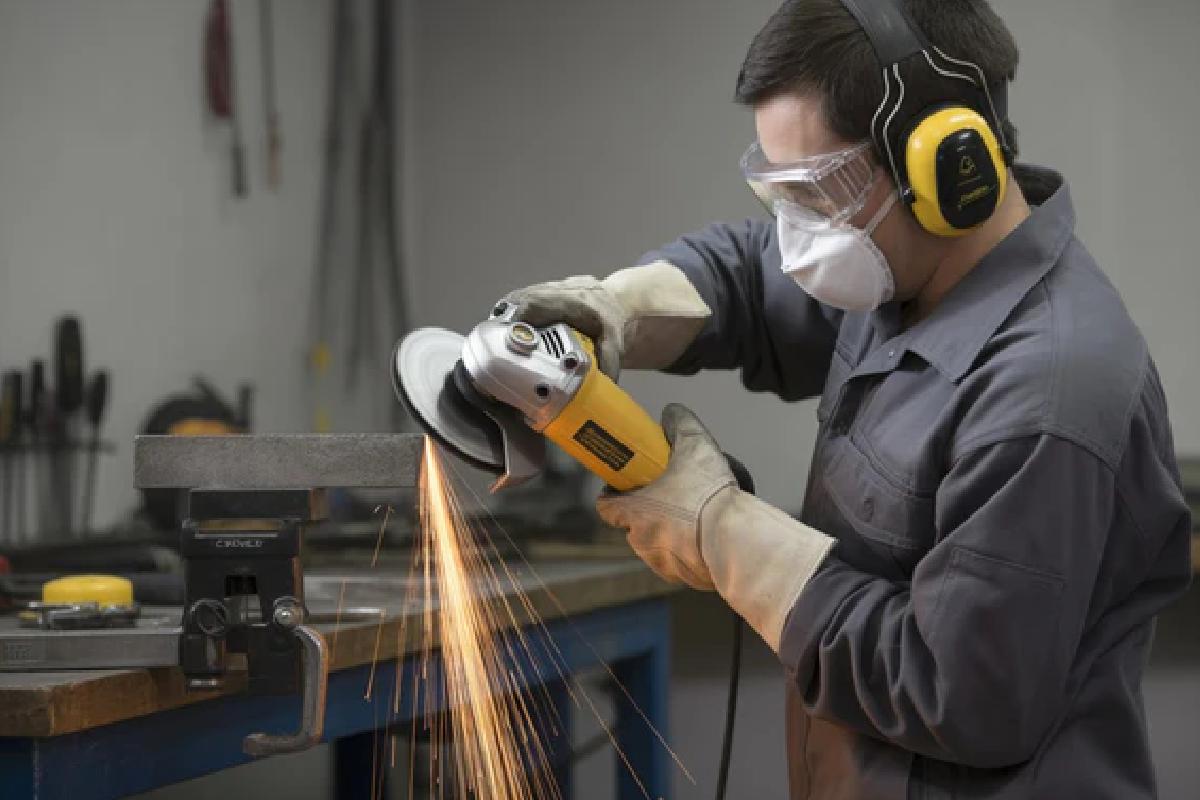
2. Wear Appropriate Personal Protective Equipment (PPE)
- Safety Goggles: These will keep your eyes out of trouble in case of sparks and debris.
- Ear Protection: the angle grinders are loud. Earplugs or ear muffs would save your hearing in the long run.
- Dust Mask: A mask will help guard your breathing system especially when handling materials that cause dusts that are harmful.
- Safety Gloves: This will insulate your hands against all possible cuts and burns.
- Protective Shoes: Steel-toed footwear can help avoid foot injuries because of dropped materials or the tool itself.
3. Ensure the Tool Is in Good Condition
Always check your angle grinder. Inspect any damage or wear, most particularly to power cord, plug and blades. The handle and the guard should always be properly attached. In the case you are unsure of the integrity of your tool, it would be time to think about replacing it. To be sure and secure, keep in mind to purchase here with the help of trusted sellers and well-known brands.
4. Use the Right Disc for the Job
The angle grinders are able to fit a range of discs in performing various tasks:
- Cutting Discs: For slicing through materials.
- Grinding Discs: For refining and smoothing surfaces.
- Wire Brushes: For removing rust or old paint.
Always make sure that the disc is adequate to handle the material you are working on whether it can be metal, stone or wood. Besides, examine discs regularly and remove any evidence of damaging or wearing.
5. Handle With Care
Always have a strong grip: It is best to hold on firmly with both hands to achieve the greatest control particularly when using the grinder as it is at this point that kickback will be most likely to happen.
Let the tool come to a complete stop: After switching it off, never put it down or touch the disc until it has stopped spinning completely.
Be watchful: This is always important to be aware of the environment around you, particularly when working in small or narrow areas.
6. Store Properly
Use of the angle grinder should be put off until it requires use, where it should be unplugged and kept in a safe dry place not accessible to children. Before storing it, it is recommended to wipe it off to avoid accidental injuries.
7. Avoid Bypassing Safety Features
Most new angle grinders are fitted with safety features such as variable guards, dead-man switches and anti-kickback. Do not ever seek to disable or to bypass these features. They are made to save you.
8. Work in a Safe Environment
Ventilation: When in an indoor environment, make sure that the place is well ventilated, and it is so when you are dealing with materials that generate harmful dusts or fumes.
Clean workspace: It is important to keep your workspace clear of any unwanted tools, rubbish, and other hindrance. This helps in mitigating the chances of knocking or tripping on the grinder.
Fire precautions: It is advisable to keep a fire extinguisher close to the area or place where one is working on or dealing with flammable material.
Kickback: The Most Dangerous Event
Kickback occurs when the rotating disc binds or stalls suddenly.
Causes
- Twisting the grinder mid-cut
- Forcing the disc
- Cutting unsupported material
- Using damaged discs
Prevention Strategy
- Maintain a 15–30° angle while grinding
- Do not cut with the top quadrant of the disc
- Clamp workpiece securely
- Use anti-kickback models
Premium models from brands like Bosch, Makita, and DeWalt include electronic brake systems.
Electrical Safety Protocol
Corded Grinders
- Use 3-pin grounded outlets
- Avoid extension cords longer than 10 meters
- Inspect insulation cracks
Cordless Grinders
- Use original battery packs only
- Avoid overcharging
- Store at 20–25°C
Battery replacement cost in India:
₹2,000 – ₹8,000 depending on voltage and brand. (Bosch Power Tools)
Fire and Spark Management
Angle grinders produce sparks reaching temperatures above 1000°C.
Fire Prevention Checklist
- Keep 10-meter spark clearance
- Remove flammable liquids
- Keep Class ABC fire extinguiser nearby
- Avoid grinding near gas cylinders
Advanced PPE Requirements
Beyond basic PPE, professionals often use:
- Face shield (ANSI Z87.1 certified)
- Flame-resistant clothing
- Cut-resistant gloves (Level 5 rating)
- Respirator (N95 or higher for silica)
PPE Cost in India
| Item | Price Range |
|---|---|
| Safety Goggles | ₹150 – ₹800 |
| Ear Muffs | ₹500 – ₹2,000 |
| N95 Mask | ₹20 – ₹100 |
| Face Shield | ₹300 – ₹1,200 |
| Industrial Gloves | ₹200 – ₹1,000 |
Safe Operating Procedure (Step-by-Step)
Before Operation
- Inspect disc for cracks
- Ensure guard is positioned between disc and body
- Secure workpiece
- Remove loose clothing
During Operation
- Start grinder before contacting surface
- Apply light pressure
- Maintain stable stance
- Keep cord behind tool
After Operation
- Allow disc to stop completely
- Unplug before disc change
- Store in dry cabinet
Maintenance and Lifecycle Management
Regular Maintenance
- Clean air vents weekly
- Check carbon brushes every 6 months
- Lubricate gear head annually
- Replace worn discs immediately
Average Tool Lifespan
| Usage Level | Expected Life |
|---|---|
| Occasional DIY | 5–7 years |
| Regular Workshop | 3–5 years |
| Heavy Industrial | 2–3 years |
Legal and Regulatory Considerations
Workplace usage must comply with:
- Occupational Safety and Health Administration standards (globally referenced)
- Local Indian Factory Act safety regulations
- Bureau of Indian Standards (BIS) electrical safety norms (OSHA)
Common Mistakes to Avoid
- Removing safety guard
- Using expired discs
- Holding material by hand
- Grinding aluminum with standard disc
- Using cutting disc for side grinding
Price Overview of Popular Angle Grinders in India
| Brand | Model Type | Approx Price |
|---|---|---|
| Bosch | GWS 600 | ₹2,200 – ₹3,000 |
| Makita | 9553B | ₹3,500 – ₹4,500 |
| DeWalt | DWE8100S | ₹3,800 – ₹5,500 |
| Black+Decker | G720 | ₹2,000 – ₹3,000 |
Premium heavy-duty models may exceed ₹15,000.
Indoor vs Outdoor Usage Safety
| Factor | Indoor | Outdoor |
|---|---|---|
| Ventilation | Critical | Natural airflow |
| Fire Risk | High | Moderate |
| Dust Control | Requires extraction | Easier dispersion |
| Noise Control | Enclosed hazard | Reduced echo |
Professional Workshop Safety Enhancements
- Install spark curtains
- Use dust extraction systems
- Conduct monthly safety audits
- Maintain tool inspection logs
- Train operators annually
Emergency Response Plan
If accident occurs:
- Turn off power immediately
- Apply pressure to bleeding wound
- Do not remove embedded debris
- Seek medical attention
- Report incident for investigation
Environmental Considerations
- Dispose of used discs as industrial waste
- Recycle metal shavings
- Avoid grinding treated wood (toxic fumes)
- Use low-noise models in residential zones
Insurance and Liability
Commercial users should consider:
- Worker compensation insurance
- Public liability coverage
- Equipment insuranc
Conclusion
An angle grinder though incredibly useful has to be respected and handled with care. By observing these safety measures, you will not only extend the life of the tool that you are using, but also make sure of your safety as well as that of others. It is important to remember that the most important aspect of using it effectively is a mix of knowledge, preparation, and active practice.
For readers interested in practical preparation and safety beyond workshop projects, preparing for the long haul offers another useful perspective. Those interested in travel and leisure can also explore scenic train journeys, while food enthusiasts can discover the irresistible world of the most delicious for inspiration on another side of everyday life.

Afiya Jafar
Afiya Jafar is a lifestyle and home living writer at Country Living Blog who focuses on simple, practical and comfortable approaches to everyday living. Her content covers home improvement, gardening, interior ideas, décor, household organisation and lifestyle topics.
View Author Profile →
Sameena Begum
Sameena Begum is a lifestyle, home and digital content reviewer who reviews selected Country Living Blog articles for clarity, organisation, consistency and reader usefulness.
View Reviewer Profile →